Your Gateway to Elite Forex Deals
Discover exclusive broker promotions, powerful trading tools, and insights to trade smarter.
Offers Worth Your Attention
Hand-picked promotions, cashback, and risk-protection deals - updated monthly by our team.
ForexDealsPro Cashback
Up to $11 back per lot, via XM
- Paid on every trade, win or lose
- Automatic, no claims needed
- Real, verified rebate rates
- No extra cost to trade
1st Trade Secured
Covered up to $100, via TradeRise
- Loses? You get covered
- Wins? You keep the profit
- No minimum deposit required
- One-time offer per account
No-Deposit Bonus
$30 free to trade, via XM
- No deposit required to start
- Trade real market conditions
- Withdraw eligible profits
- Sign-up takes under 5 minutes


Get Paid on Every Trade You Make
Earn rebates on every trade you execute. Cashback rates are transparent, automatic, and paid straight into your account.
All Broker Promotions
All current promotions · Filter by broker below
Brokers Review
Regulated, reviewed, and independently rated - compare in seconds
Broker Comparison Table
Regulated, reviewed, and independently rated - compare in seconds
| Broker | Est. ▲ | Spread EUR/USD ▲ | Min. deposit ▲ | Regulation | Platform | Trustpilot Rating ▲ | Action |
|---|
Best Forex Brokers by Country
Regulated brokers that accept traders in your country — hand-picked by region, with local deposit methods and the best deals for each market.


MT4/MT5 Indicators & Expert Advisors
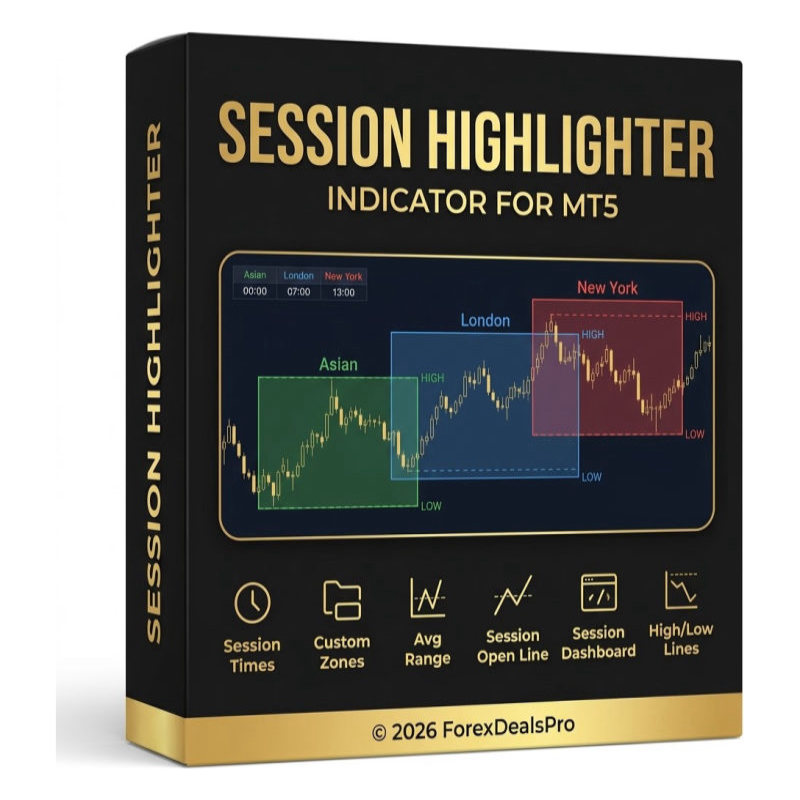
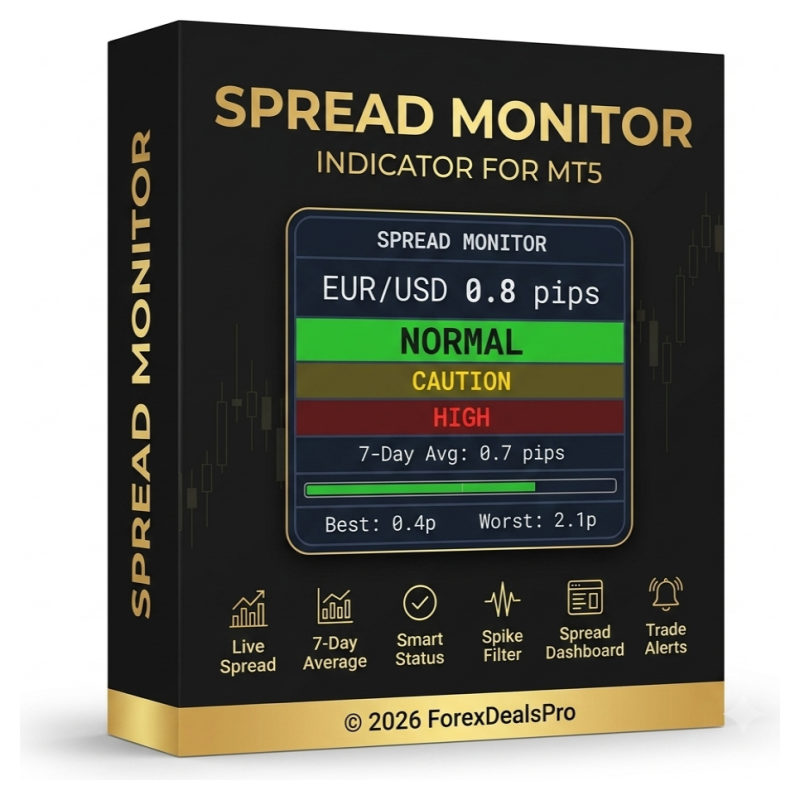
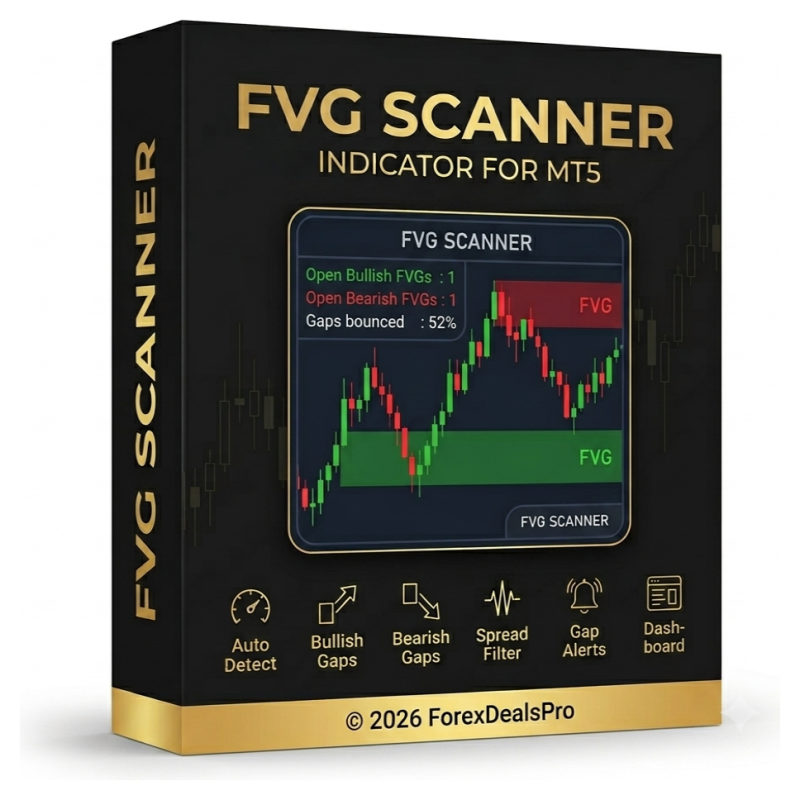
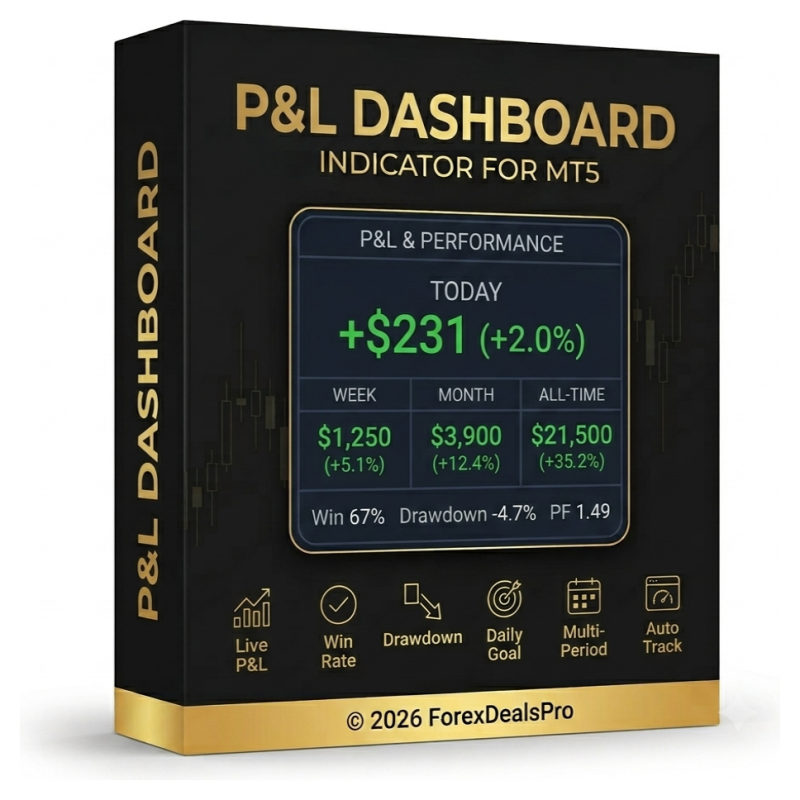
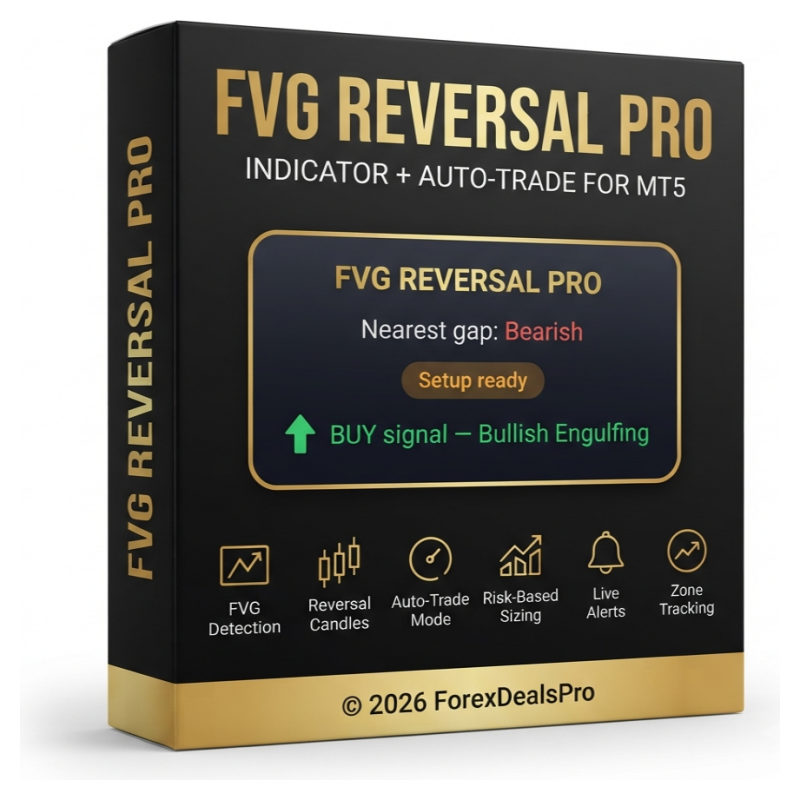
A growing library of professional MT5 indicators and Expert Advisors, built in-house to give you a genuine trading edge — and many are free to download.
Cashback - The Smart Way to Reduce Your Trading Costs
You earn on every trade.
Regardless of the outcome.
Cashback is a rebate paid on the spread or commission of every trade you execute - whether the trade wins or loses. It's the only trading benefit that never depends on market direction. The more you trade, the more you earn back, automatically.
How to start earning




What Is Forex Trading? A Complete Beginner's Guide
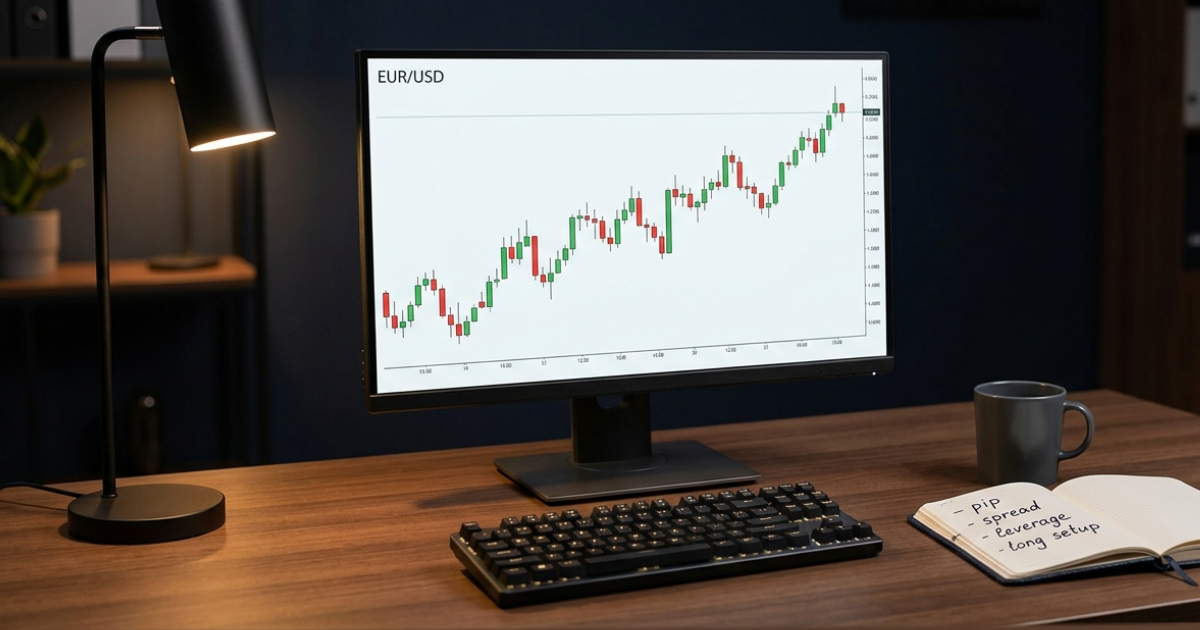
What Is Forex Trading?
Forex trading is the buying of one currency and the simultaneous selling of another, with the goal of profiting from the change in their relative value. "Forex" is short for foreign exchange, and the forex market is where this happens on a global scale, twenty four hours a day, five days a week.
Every time you exchange money while travelling, you are technically taking part in a tiny version of this same market. Forex trading applies the same basic idea, buying one currency with another, at a much larger and more active scale, using an online broker instead of an airport currency counter.
The forex market is the largest financial market in the world by trading volume. According to the Bank for International Settlements' 2025 Triennial Central Bank Survey, based on data collected from more than 1,100 banks and dealers across 52 jurisdictions, global foreign exchange turnover averaged $9.6 trillion per day in April 2025, a 28% increase from the $7.5 trillion per day recorded in the 2022 survey.[1]
Unlike stock exchanges, there is no single physical location where forex trading happens. It takes place electronically, over the counter, through a global network of banks, brokers, and financial institutions.
How the Forex Market Works
The forex market runs on a 24 hour cycle from Monday morning in Asia through to Friday evening in New York. It does this by passing through four major trading sessions as different financial centres around the world open and close.
The four main sessions are Sydney, Tokyo, London, and New York. As one session winds down, another is opening, which is what keeps the market continuously active during the trading week. The London and New York sessions overlap for a few hours each day, and this overlap is typically the most active and liquid period in the entire trading day because it combines participants from both major financial centres. If you want to see these session windows marked directly on your own charts, our free Session Highlighter indicator does this automatically.
The market is described as over the counter, meaning trades are not routed through a central exchange like the New York Stock Exchange. Instead, your broker executes your trade either directly in the interbank market or against its own liquidity, depending on the broker's execution model. This is a structural difference from stock trading that is worth understanding before you place your first trade.
Because there is no single exchange, prices can vary slightly between different brokers at the same moment. In practice, for major currency pairs, this difference is usually very small.
Understanding Currency Pairs
Currency is always traded in pairs, because you are simultaneously buying one currency and selling another. A pair is written as two three letter currency codes, for example EUR/USD, which represents the euro against the US dollar.
The first currency in the pair is called the base currency. The second is called the quote currency. The price you see tells you how much of the quote currency it takes to buy one unit of the base currency. If EUR/USD is trading at 1.0850, it means one euro is worth 1.0850 US dollars.
Currency pairs are generally grouped into three categories:
Major pairs involve the US dollar paired with another heavily traded currency, such as EUR/USD, GBP/USD, USD/JPY, and USD/CHF. These are the most actively traded pairs and typically have the tightest spreads because of their high liquidity.
Minor pairs, also called cross pairs, do not include the US dollar, for example EUR/GBP or AUD/JPY. They are traded less than majors but still involve widely used currencies.
Exotic pairs pair a major currency with the currency of a smaller or emerging economy, such as USD/ZAR or USD/TRY. These typically have wider spreads and lower liquidity than majors or minors, which means higher trading costs and greater price volatility.
According to the BIS 2025 Triennial Survey, the US dollar was on one side of 89% of all global FX trades in April 2025, which is why so much retail trading activity centres on USD pairs.[1]
Key Terms Every Trader Should Know
The core vocabulary you will encounter on every broker platform and in every piece of trading education.
| Term | What It Means |
|---|---|
| Pip | The smallest standard price movement for a currency pair, usually the fourth decimal place (for JPY pairs, the second decimal place). Most price movement in forex is measured in pips. |
| Spread | The difference between the buy price (ask) and the sell price (bid) of a currency pair. This is one of the main ways brokers earn revenue, and it is a real cost to you on every trade. |
| Lot | A standardised trade size. A standard lot is 100,000 units of the base currency. Most retail brokers also offer mini lots (10,000 units) and micro lots (1,000 units), which let beginners trade with smaller position sizes. |
| Leverage | Borrowed capital provided by your broker that lets you control a larger position than your account balance alone would allow. Leverage magnifies both potential gains and potential losses, and regulators in most major jurisdictions cap how much leverage a broker can offer retail clients. |
| Margin | The amount of your own capital that must be set aside in your account to open and maintain a leveraged position. If your account balance falls below the required margin due to losses, your broker may automatically close your position, commonly called a margin call or stop out. |
| Long / Short | Going "long" means buying a currency pair, expecting its value to rise. Going "short" means selling a currency pair, expecting its value to fall. Unlike some other markets, forex allows you to profit from a currency's value rising or falling. |
Who Actually Trades Forex?
Retail traders are a relatively small part of a market dominated by much larger institutional participants.
Central banks participate to manage their country's currency reserves and to influence monetary policy, though this is not trading in the retail sense.
Commercial and investment banks make up the largest share of daily volume, trading on their own behalf and on behalf of large clients. Per the BIS 2025 Triennial Survey, FX swaps were the most traded instrument at $4 trillion per day in April 2025, and spot transactions accounted for $3 trillion per day, or 31% of total global turnover.[1]
Multinational companies use the forex market to hedge currency risk on international revenue and payments, not to speculate on price movement.
Hedge funds and institutional investors trade forex both to speculate on currency movement and to hedge other positions in their portfolios.
Retail traders, individuals trading through an online broker, are the newest and smallest category of participant by volume, but the segment has grown substantially as broker platforms have become more accessible over the past two decades.
The BIS survey also found that trading desks in just four jurisdictions, the United Kingdom, the United States, Singapore, and Hong Kong, accounted for 75% of total global FX trading in April 2025, reflecting how concentrated institutional forex activity is around a small number of major financial centres.[1]
How to Place Your First Trade
Is Forex Trading Risky?
Yes. Forex trading carries a high level of risk, and this needs to be understood clearly before you deposit any money, not discovered after a loss.
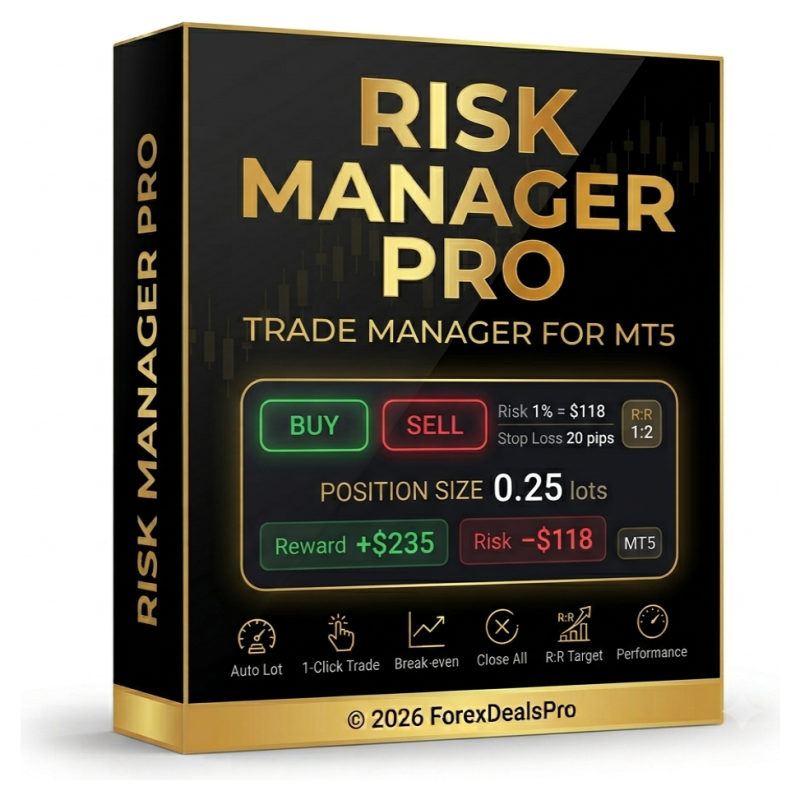
The main source of risk for retail traders is leverage. Because leverage lets you control a position much larger than your account balance, losses can accumulate quickly if the market moves against you, and it is possible to lose more than your initial deposit in some account structures. This is precisely why regulators in major jurisdictions, including the UK's Financial Conduct Authority and the European Securities and Markets Authority, have introduced leverage caps and mandatory negative balance protection for retail clients over the past several years.[2] Tools like our free Risk Manager Pro indicator can help you calculate safe position sizes and keep your leverage exposure under control directly on your own charts.
Market volatility is a second source of risk. Currency prices can move sharply around economic data releases, central bank announcements, and geopolitical events, and these moves are not always predictable in advance.
None of this means forex trading cannot be approached responsibly. It means treating it as what it is, a skill that takes real time to learn, with genuine financial risk attached, rather than a fast or guaranteed way to generate income. Anyone who tells you otherwise is not being straight with you.
If you want a structured way to start learning what type of trading approach might suit you, our free Broker Match Quiz is a reasonable starting point, and our guide to choosing a forex broker walks through exactly what to verify before you open any account.
Frequently Asked Questions
No. Many regulated brokers accept a minimum deposit of $5 to $10, and micro lots let you trade with very small position sizes. Starting small, or on a demo account, is a reasonable way to learn without significant financial exposure.
Yes. Because the market runs 24 hours a day during the trading week, you can trade around a full time job or other commitments, though execution quality and volatility vary by session, and the London/New York overlap is generally the most active window.
Forex trading specifically refers to trading currency pairs. Many brokers offer forex alongside CFDs (contracts for difference) on other assets like indices, commodities, and shares, using the same underlying leveraged trading mechanism.
Forex trading and gambling are structurally different, trading involves analysing real economic and market information to make a decision, while gambling outcomes are typically based on chance. That said, forex trading without a clear plan, risk management, or education can produce gambling-like outcomes, which is exactly why proper preparation matters.
There is no fixed timeline, and treating any specific number of weeks or months as a guarantee of competence would be misleading. Most traders spend a meaningful period on a demo account before moving to live trading, and continue learning well beyond that point.
References
References
- Bank for International Settlements: Global FX trading hits $9.6 trillion per day in April 2025, Triennial Central Bank Survey, published 30 September 2025: bis.org/press/p250930.htm
- FCA: Contracts for Difference (CFDs), retail leverage limits and negative balance protection: fca.org.uk/consumers/cfds
All data verified July 2026 against the cited primary sources. Always verify current regulatory requirements directly with the relevant regulator before opening a trading account.
About Us
Your trusted gateway to elite forex deals, broker reviews, and smarter trading.
What We Do
We research, verify, and curate the best broker deals, cashback programmes, and trading promotions available in the market, updated regularly so you always have access to what is current and relevant. Alongside our deals, we publish independent broker reviews built on objective criteria: regulatory standing, trading conditions, platform quality, and client protections.
Who We Are
ForexDealsPro is run by a dedicated team of trading and finance professionals with over a decade of combined market experience. That hands-on knowledge informs everything we publish, from the brokers we feature to the way we explain complex trading concepts in plain language.
We operate as an affiliate information platform. We earn a commission when you open an account through our links, at no additional cost to you. This model allows us to keep the platform free, independent, and focused entirely on trader value.
Our Standards
- We only feature brokers regulated by recognised financial authorities
- Every deal and promotion is verified before publication
- Broker ratings are independent and never influenced by commercial relationships
- Affiliate partnerships are always disclosed transparently
Our Editorial Process
All articles published on ForexDealsPro are thoroughly researched using primary regulatory sources, industry reports, and reputable financial publications, then verified for accuracy before publication. Our editorial team holds combined experience in forex trading, financial analysis, and compliance.