Your Gateway to Elite Forex Deals
Discover exclusive broker promotions, powerful trading tools, and insights to trade smarter.
Offers Worth Your Attention
Hand-picked promotions, cashback, and risk-protection deals - updated monthly by our team.
ForexDealsPro Cashback
Up to $11 back per lot, via XM
- Paid on every trade, win or lose
- Automatic, no claims needed
- Real, verified rebate rates
- No extra cost to trade
1st Trade Secured
Covered up to $100, via TradeRise
- Loses? You get covered
- Wins? You keep the profit
- No minimum deposit required
- One-time offer per account
No-Deposit Bonus
$30 free to trade, via XM
- No deposit required to start
- Trade real market conditions
- Withdraw eligible profits
- Sign-up takes under 5 minutes


Get Paid on Every Trade You Make
Earn rebates on every trade you execute. Cashback rates are transparent, automatic, and paid straight into your account.
All Broker Promotions
All current promotions · Filter by broker below
Brokers Review
Regulated, reviewed, and independently rated - compare in seconds
Broker Comparison Table
Regulated, reviewed, and independently rated - compare in seconds
| Broker | Est. ▲ | Spread EUR/USD ▲ | Min. deposit ▲ | Regulation | Platform | Trustpilot Rating ▲ | Action |
|---|
Best Forex Brokers by Country
Regulated brokers that accept traders in your country — hand-picked by region, with local deposit methods and the best deals for each market.


MT4/MT5 Indicators & Expert Advisors
A growing library of professional MT5 indicators and Expert Advisors, built in-house to give you a genuine trading edge — and many are free to download.
Cashback - The Smart Way to Reduce Your Trading Costs
You earn on every trade.
Regardless of the outcome.
Cashback is a rebate paid on the spread or commission of every trade you execute - whether the trade wins or loses. It's the only trading benefit that never depends on market direction. The more you trade, the more you earn back, automatically.
How to start earning





Forex Trading Sessions Explained: London, New York, Tokyo & Sydney Overlap Times
Why Forex Has "Sessions" at All
If you're still new to the basics, our What Is Forex Trading guide is worth reading first. Unlike a stock exchange, the forex market has no single physical location or official opening bell. It's an over-the-counter (OTC) market made up of banks, brokers, and other participants trading directly with each other, active somewhere in the world essentially around the clock on weekdays. Global daily turnover in this market reached $9.6 trillion per day as of the Bank for International Settlements' most recent Triennial Central Bank Survey, taken in April 2025, a 28% increase from the $7.5 trillion/day recorded in the 2022 survey[1].
"Sessions" is trader shorthand for the fact that activity concentrates around when major financial centers are open for business in their own local hours, even though the market technically never fully closes between the Sydney open on Monday morning and the New York close on Friday afternoon.
The Four Major Sessions
Local trading hours confirmed directly against each region's own exchange or market authority. Forex-specific "session" hours are industry convention built around these, not separately regulator-defined.
| Session | Confirmed Local Hours | Source |
|---|---|---|
| London | 08:00–16:30 London time | London Stock Exchange |
| New York | 9:30 a.m.–4:00 p.m. ET (core session) | NYSE |
| Tokyo | Morning + afternoon sessions (afternoon 12:30–15:30 JST) | Japan Exchange Group (JPX) |
| Sydney | Approx. 10:00–16:00 Sydney time (pre-open from 07:00) | ASX |
Session Overlaps: What's Fact vs Convention
It's worth being precise here, because a widely repeated claim doesn't hold up under direct scrutiny. Many trading sites state that the London-New York overlap sees the "highest liquidity" of any period, sometimes citing a specific percentage of daily volume. That specific claim is not something the BIS Triennial Survey, or any central bank source, actually states. The BIS survey reports FX turnover by sales-desk location (the UK, US, Singapore, and Hong Kong SAR together account for 75% of global FX trading activity by this measure[1]) and by currency pair, not by hour of day or session-overlap window. No primary source we could locate breaks volume down by time of day.
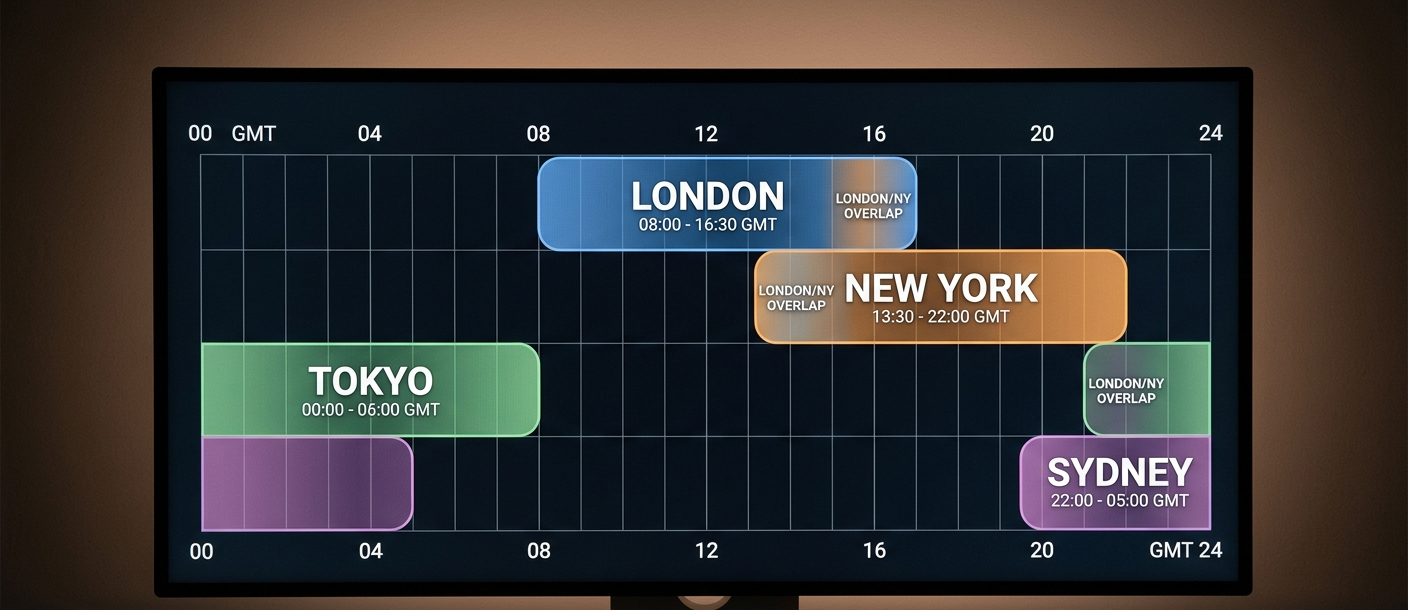
What is genuinely true, and follows logically from the geographic concentration data, is that London and New York are, by a wide margin, the two largest FX trading centers, and their business hours do overlap for roughly four hours each trading day, from the New York morning open until the London afternoon close. It's a reasonable inference that combined activity is elevated during that window, but treat it as trader observation and convention, not a regulator-confirmed statistic, since no official source publishes hour-by-hour volume data to actually verify a specific number.
The Weekend Close and Gap Risk
The session framework also explains a genuinely practical risk that new traders sometimes overlook: the weekend gap. The market closes after the New York session ends Friday afternoon and doesn't reopen until the Sydney session begins Sunday evening (local time zones vary). Whatever happens in the world during that closed window, a geopolitical event, an economic surprise, a central bank statement, doesn't get priced in gradually. It all shows up at once the moment Sydney reopens, which can mean a price that opens noticeably away from where it closed on Friday.
This is one of the most concrete, practical reasons session timing matters beyond just "when is it busiest." Holding a position open into the weekend close carries a specific, identifiable risk that holding the same position mid-week during active trading hours doesn't.
Planning Around Sessions in Practice
Regardless of the exact liquidity figures, session timing has real, practical effects worth planning around. Spreads on many pairs tend to be tighter when more participants are active in a shared window, and price moves can be choppier or thinner during the gap between the New York close and the Sydney/Tokyo open, when fewer major-center desks are actively trading. Knowing roughly when your traded pairs' relevant centers are open, not a memorized liquidity percentage, is the actually useful takeaway.
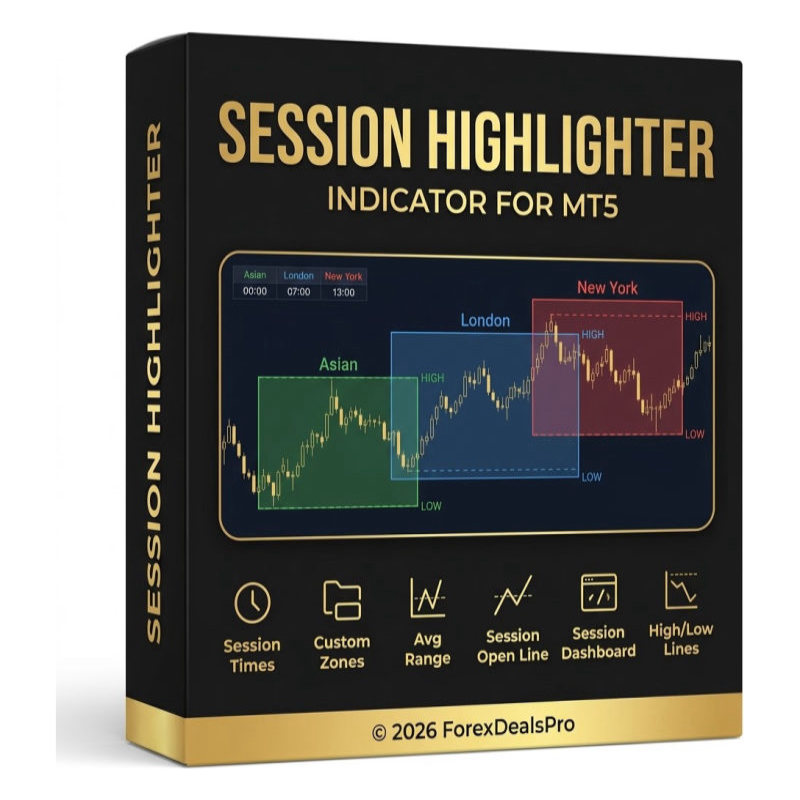
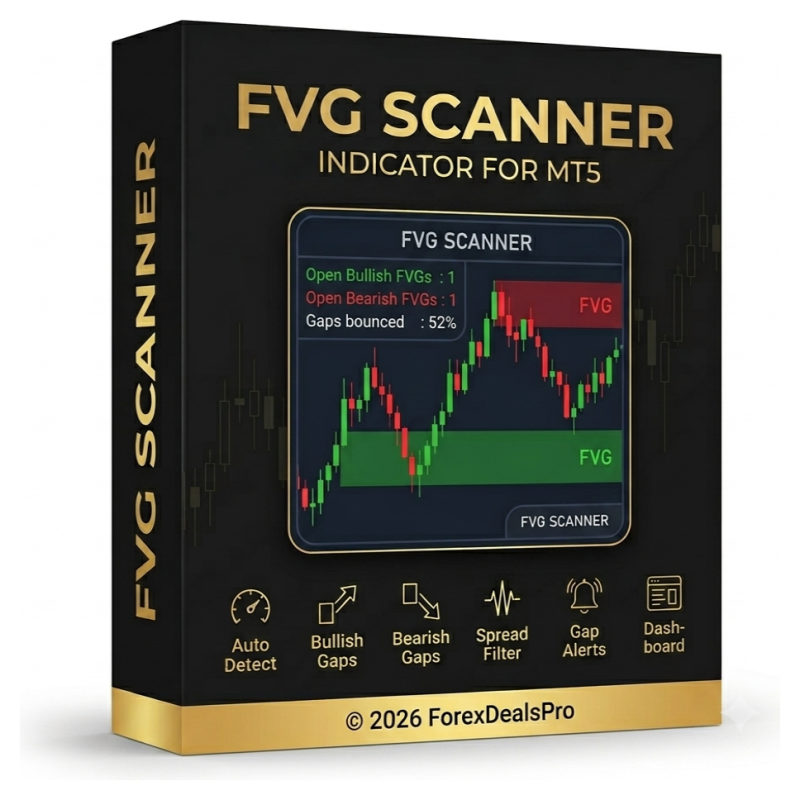
ForexDealsPro's free Session Highlighter tool marks these session windows directly on your MT4/MT5 chart, so you can see which session is active without checking a separate clock or table. If you're watching for sharp, session-open moves specifically, our FVG Scanner flags Fair Value Gaps in real time, which often form right around these higher-volatility windows.
Execution quality during these active windows also depends on your broker's infrastructure, not just the market itself. IC Markets is built specifically around fast execution and supports trading through TradingView, which is worth checking out if execution speed during busy overlap windows matters to your strategy. Our full IC Markets review covers its execution model and spreads in detail.
Frequently Asked Questions
It's the period when the two largest FX trading centers are both active, which reasonably suggests elevated activity, but no central bank or regulator publishes hour-by-hour volume data confirming a specific "highest liquidity" figure for this window. Treat it as informed convention, not a verified statistic.
It closes over the weekend, generally from the New York close Friday to the Sydney open Sunday evening (local time zones vary). During the weekday, activity shifts between regional centers but doesn't fully stop.
It's the risk that a currency pair's price opens noticeably away from where it closed on Friday, because news and events during the weekend market closure get priced in all at once when trading resumes, rather than gradually.
Yes. Since sessions are tied to each region's local business hours, and not all regions shift their clocks on the same dates (or at all), the exact overlap windows in UTC/GMT terms shift slightly around DST changes in each region.
This depends on which currency pairs you're trading and your own time zone and availability. There's no universally "best" session for a beginner specifically. Understanding when your traded pairs' relevant markets are open is more useful than targeting one session by reputation alone.
References
References
- Bank for International Settlements: 2025 Triennial Central Bank Survey of Foreign Exchange and OTC Derivatives Markets: bis.org/statistics/rpfx25_fx.htm
- London Stock Exchange: Business Days & Trading Hours: londonstockexchange.com/equities-trading/business-days
- NYSE: Holidays & Trading Hours: nyse.com/trade/hours-calendars
- Japan Exchange Group: Trading Hours, Domestic Equities: jpx.co.jp/english/equities/trading/domestic/01.html
- ASX: Cash Market Trading Hours: asx.com.au/markets/market-resources/trading-hours-calendar/cash-market-trading-hours
About Us
Your trusted gateway to elite forex deals, broker reviews, and smarter trading.
What We Do
We research, verify, and curate the best broker deals, cashback programmes, and trading promotions available in the market, updated regularly so you always have access to what is current and relevant. Alongside our deals, we publish independent broker reviews built on objective criteria: regulatory standing, trading conditions, platform quality, and client protections.
Who We Are
ForexDealsPro is run by a dedicated team of trading and finance professionals with over a decade of combined market experience. That hands-on knowledge informs everything we publish, from the brokers we feature to the way we explain complex trading concepts in plain language.
We operate as an affiliate information platform. We earn a commission when you open an account through our links, at no additional cost to you. This model allows us to keep the platform free, independent, and focused entirely on trader value.
Our Standards
- We only feature brokers regulated by recognised financial authorities
- Every deal and promotion is verified before publication
- Broker ratings are independent and never influenced by commercial relationships
- Affiliate partnerships are always disclosed transparently
Our Editorial Process
All articles published on ForexDealsPro are thoroughly researched using primary regulatory sources, industry reports, and reputable financial publications, then verified for accuracy before publication. Our editorial team holds combined experience in forex trading, financial analysis, and compliance.