Your Gateway to Elite Forex Deals
Discover exclusive broker promotions, powerful trading tools, and insights to trade smarter.
Offers Worth Your Attention
Hand-picked promotions, cashback, and risk-protection deals - updated monthly by our team.
ForexDealsPro Cashback
Up to $11 back per lot, via XM
- Paid on every trade, win or lose
- Automatic, no claims needed
- Real, verified rebate rates
- No extra cost to trade
1st Trade Secured
Covered up to $100, via TradeRise
- Loses? You get covered
- Wins? You keep the profit
- No minimum deposit required
- One-time offer per account
No-Deposit Bonus
$30 free to trade, via XM
- No deposit required to start
- Trade real market conditions
- Withdraw eligible profits
- Sign-up takes under 5 minutes


Get Paid on Every Trade You Make
Earn rebates on every trade you execute. Cashback rates are transparent, automatic, and paid straight into your account.
All Broker Promotions
All current promotions · Filter by broker below
Brokers Review
Regulated, reviewed, and independently rated - compare in seconds
Broker Comparison Table
Regulated, reviewed, and independently rated - compare in seconds
| Broker | Est. ▲ | Spread EUR/USD ▲ | Min. deposit ▲ | Regulation | Platform | Trustpilot Rating ▲ | Action |
|---|
Best Forex Brokers by Country
Regulated brokers that accept traders in your country — hand-picked by region, with local deposit methods and the best deals for each market.


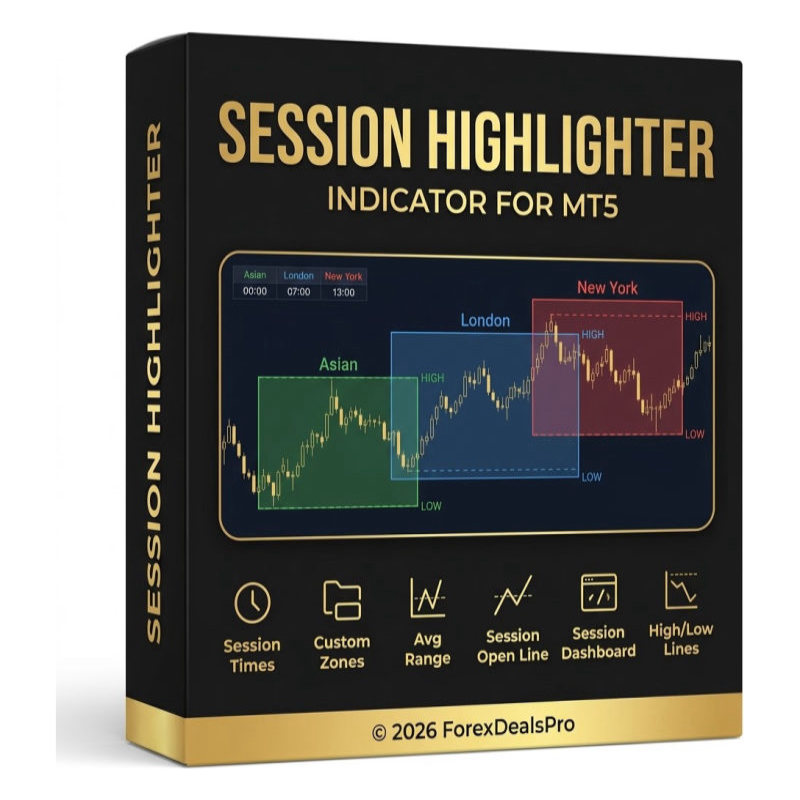
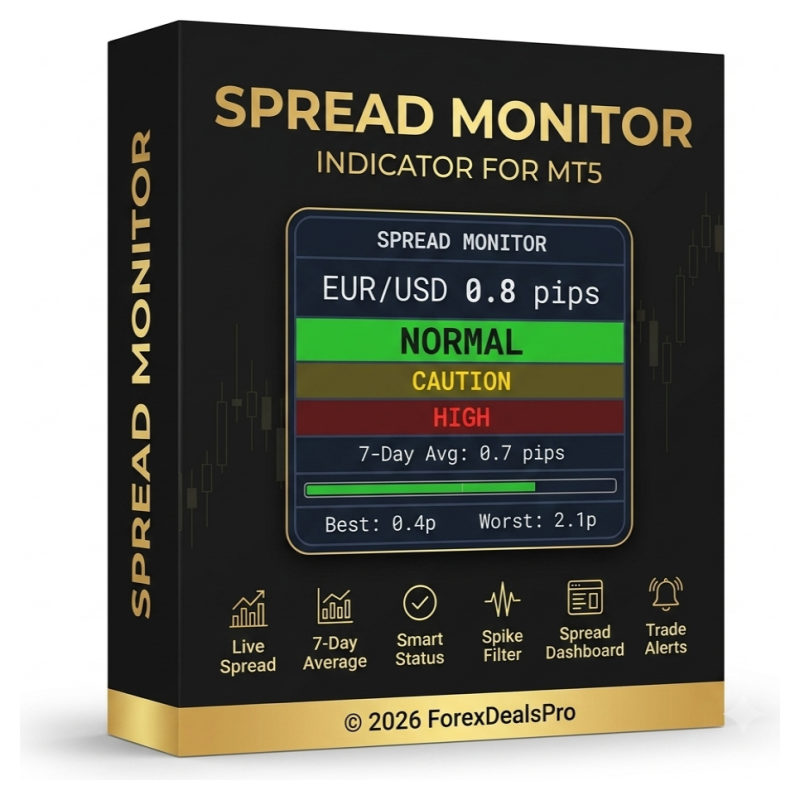
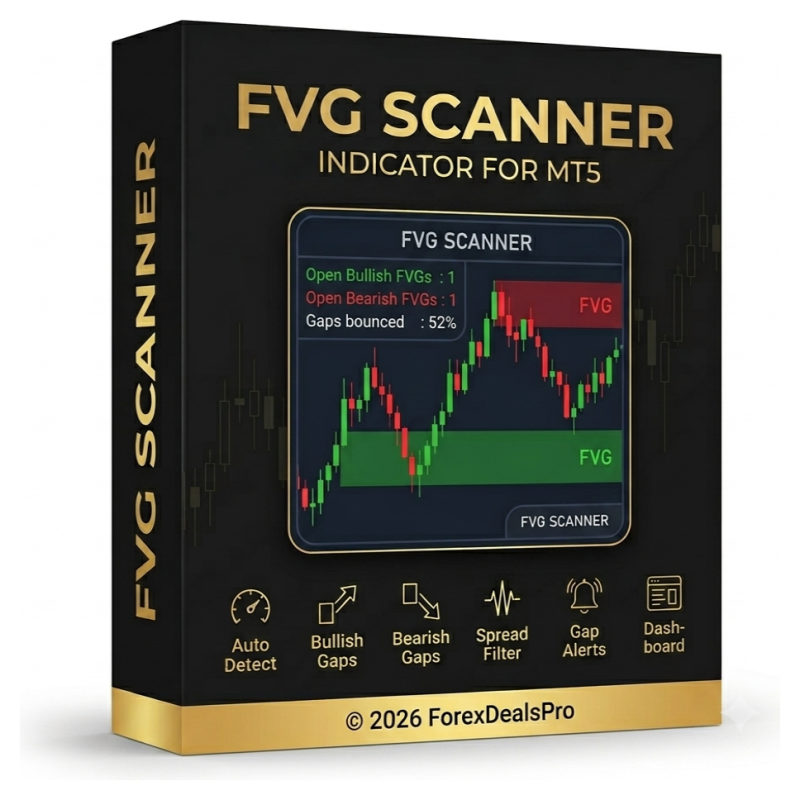
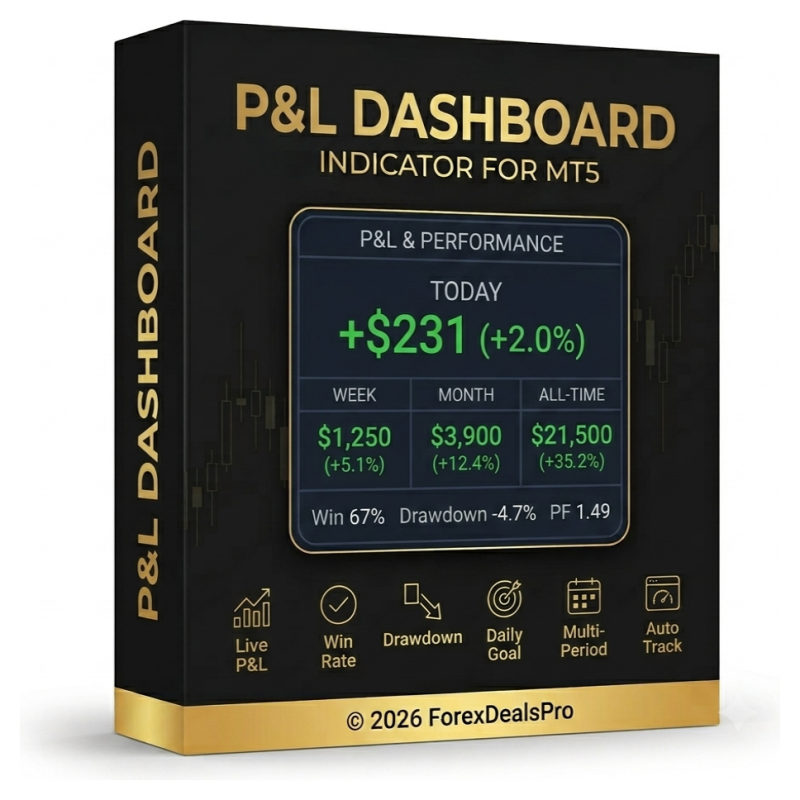
MT4/MT5 Indicators & Expert Advisors
A growing library of professional MT5 indicators and Expert Advisors, built in-house to give you a genuine trading edge — and many are free to download.
Cashback - The Smart Way to Reduce Your Trading Costs
You earn on every trade.
Regardless of the outcome.
Cashback is a rebate paid on the spread or commission of every trade you execute - whether the trade wins or loses. It's the only trading benefit that never depends on market direction. The more you trade, the more you earn back, automatically.
How to start earning




Forex Risk Management: The 1-2% Rule and How to Protect Your Account

Why Risk Management Comes Before Strategy
Ask a group of new traders what they're studying and you'll usually hear the same answers: candlestick patterns, moving averages, RSI, support and resistance, or the latest "high win-rate" strategy.
Those topics matter, but they aren't what determines whether a trading account survives.
The first decision every trader makes isn't whether to buy or sell. It's how much they're prepared to lose if they're wrong.
A profitable strategy can't save an account that's consistently risking too much. On the other hand, even a modest trading edge has a chance to compound over time when losses are kept under control. That's why experienced traders often treat risk management as the foundation of every decision they make.
If you're still learning the basics of the market itself, it's worth understanding how forex trading works before diving into position sizing. Once you know how trades are placed, learning how to manage risk becomes the next priority.
Why Position Sizing Matters More Than Entry Signals
Imagine two traders using exactly the same strategy.
Both enter the same trades. Both use the same stop loss. Both experience five consecutive losing trades.
The only difference is how much they risk on each trade.
Trader A risks 10% of their account each time. After five losses, their account has fallen by roughly 41%.
Trader B risks 1% per trade. After the same five losses, they're down less than 5%.
Nothing about the strategy changed. Only the amount at risk did.
That's why professional traders rarely judge a strategy after a handful of trades. They understand that losing streaks are inevitable. Good risk management ensures those streaks remain an inconvenience rather than an account-ending event.
Understanding the 1-2% Rule
The 1-2% rule is one of the most widely used principles in retail and professional trading.
The idea is simple: never risk more than 1-2% of your total account equity on a single trade.
The important word is risk. It doesn't refer to the size of the position. It doesn't refer to the margin used. It refers only to the maximum amount you will lose if your stop loss is triggered.
For example, with a $10,000 trading account:
- Risking 1% means your maximum planned loss is $100.
- Risking 2% means your maximum planned loss is $200.
Whether the position is one mini lot or several standard lots depends entirely on how far away the stop loss is.
Why 1-2%?
The exact percentage isn't a legal requirement or an industry rulebook. It's a practical balance between protecting capital and allowing meaningful growth. Risking less than 1% can make progress frustratingly slow for many smaller retail accounts, while risking more than 2-3% quickly makes normal losing streaks much harder to recover from, because losses and gains aren't symmetrical. The table below shows roughly how much you need to gain back just to recover from a given loss.
| Drawdown | Gain Needed to Recover |
|---|---|
| 10% | 11.1% |
| 20% | 25% |
| 30% | 42.9% |
| 50% | 100% |
Position Size Comes Last
One of the biggest mistakes beginners make is deciding how large a position they want before deciding how much they're willing to lose.
The order should always be:
- Decide your maximum monetary risk.
- Choose the stop loss based on market structure.
- Calculate the position size.
The basic formula is:
Position Size = Maximum Risk ÷ (Stop Loss Distance × Pip Value)
For example: account balance $5,000, maximum risk 1% ($50), stop loss 25 pips, pip value $10 per standard lot.
Position size: $50 ÷ (25 × $10) = 0.20 standard lots.
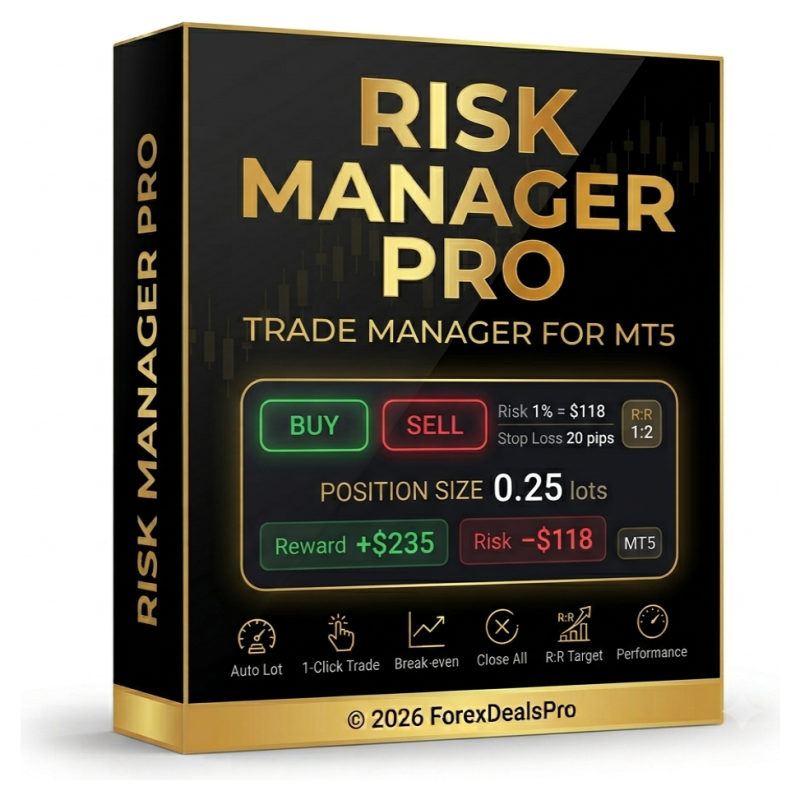
Notice that the position size is the final calculation, not the starting point. ForexDealsPro's free Risk Manager Pro runs this exact calculation automatically on your chart, so the math above never has to be done by hand on every trade.
Where Leverage Fits In
Leverage and risk are closely related, but they aren't the same thing.
Leverage determines how much market exposure you can control with your available margin. Risk management determines how much money you actually stand to lose if your trade fails.
A trader can use relatively high leverage while still risking only 1% of their account, simply by sizing the position correctly and placing an appropriate stop loss. Likewise, a trader using low leverage can still take excessive risk by trading positions that are too large for their account.
Leverage is therefore a tool, not a measure of risk.
Regulators limit the maximum leverage brokers can offer retail clients, specifically because excessive leverage makes poor risk management far more damaging. Those limits are worth knowing, but they should be viewed as ceilings, not targets.
Risk Doesn't End With One Trade
The 1-2% rule only considers one trade at a time. In practice, several other risks deserve attention.
Correlated Positions. Opening multiple positions that all depend on the same market movement can multiply your exposure without appearing to. Buying EUR/USD, GBP/USD and AUD/USD simultaneously may look like three separate trades, but all three often move together because they're heavily influenced by the strength of the US dollar. Three separate 1% risks can easily become one larger directional bet.
Daily Loss Limits. Many traders also set a daily loss limit of around 3-5% of account equity. Once that limit is reached, trading stops for the day. The purpose isn't punishment. It's preventing emotional decision-making after a losing streak. Trying to "win it back" with larger positions is one of the fastest ways a manageable loss becomes a major drawdown.
Remember That Risk Is Never Perfectly Predictable
The 1-2% rule manages planned risk, but markets don't always behave perfectly.
Major news announcements, overnight gaps and sudden volatility can all cause slippage, meaning your actual exit price differs from your stop loss. Most of the time the difference is small. Occasionally, particularly during major economic releases or periods of extreme volatility, losses can exceed the intended amount.
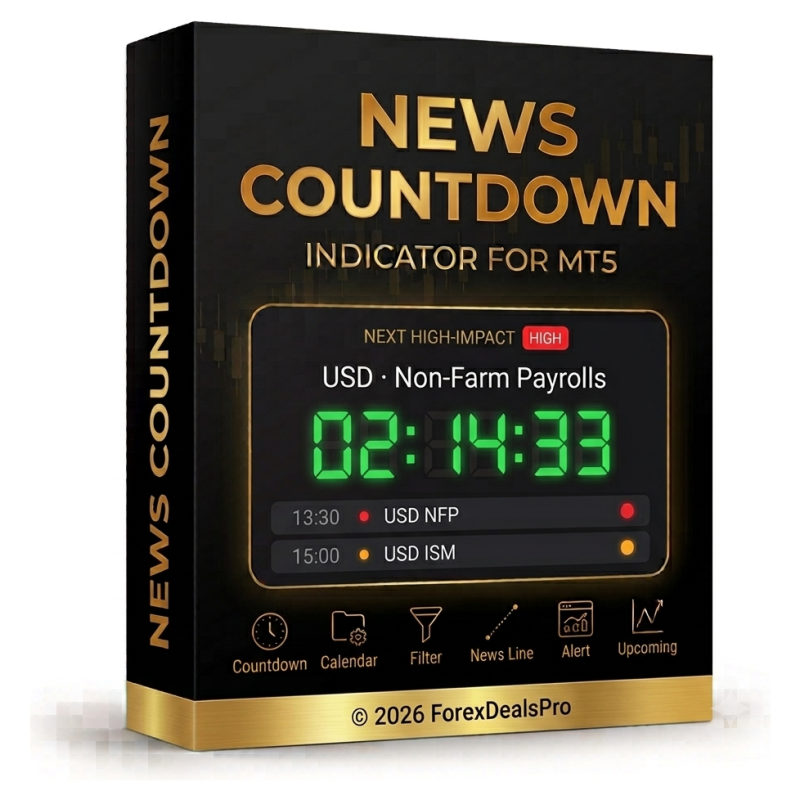
That's another reason experienced traders avoid risking too much on any single position. ForexDealsPro's free News Countdown Timer gives a clear on-chart warning ahead of scheduled high-impact events, so this kind of extra volatility is at least expected rather than a surprise.
A Simple Checklist Before Every Trade
Before opening a position, ask yourself:
- Have I decided my maximum monetary risk?
- Does my stop loss invalidate the trade idea?
- Have I calculated the correct position size?
- Am I risking too much across correlated positions?
- Is there major economic news due shortly?
- Have I placed my stop loss order immediately?
If the answer to any of these questions is "no," the trade probably isn't ready.
The Bottom Line
Successful trading isn't about avoiding losses. Losses are inevitable.
What separates long-term traders from everyone else is how they respond to those losses. Strategies produce probabilities, not certainties. Risk management is what allows those probabilities to play out over hundreds of trades instead of a handful.
Before searching for a better indicator or a more accurate entry signal, make sure every trade begins with the same question: how much am I willing to lose if I'm wrong? That single decision will usually have a greater impact on your long-term results than any strategy you ever choose.
If you want to practice everything above with real order execution before risking your own deposit, XM's $30 no-deposit bonus is a low-risk way to start.
Frequently Asked Questions
No. It's a widely used risk-management convention, not a rule set by any regulator or exchange. Regulators do set limits on how much leverage brokers can offer retail clients, which is a related but separate control from the 1-2% rule itself.
Not necessarily. The 1% refers to the amount lost if the stop loss is hit, not the full position size. With leverage, a relatively small dollar risk can still control a meaningfully larger position size.
There's no official figure for this, but a commonly used range is 3-5% of account equity per day, after which trading stops for that day regardless of how the next setup looks.
Yes. ForexDealsPro's free Risk Manager Pro calculates position size automatically from a chosen risk percentage and the trade's stop loss distance.
Not by itself. Leverage controls how much position size a given amount of margin can open, but the actual dollar risk on a trade is set by position size and stop loss distance together. A trader can use high leverage and still risk only 1% per trade with correct sizing, or use low leverage and still risk far more than intended with an oversized position.
About Us
Your trusted gateway to elite forex deals, broker reviews, and smarter trading.
What We Do
We research, verify, and curate the best broker deals, cashback programmes, and trading promotions available in the market, updated regularly so you always have access to what is current and relevant. Alongside our deals, we publish independent broker reviews built on objective criteria: regulatory standing, trading conditions, platform quality, and client protections.
Who We Are
ForexDealsPro is run by a dedicated team of trading and finance professionals with over a decade of combined market experience. That hands-on knowledge informs everything we publish, from the brokers we feature to the way we explain complex trading concepts in plain language.
We operate as an affiliate information platform. We earn a commission when you open an account through our links, at no additional cost to you. This model allows us to keep the platform free, independent, and focused entirely on trader value.
Our Standards
- We only feature brokers regulated by recognised financial authorities
- Every deal and promotion is verified before publication
- Broker ratings are independent and never influenced by commercial relationships
- Affiliate partnerships are always disclosed transparently
Our Editorial Process
All articles published on ForexDealsPro are thoroughly researched using primary regulatory sources, industry reports, and reputable financial publications, then verified for accuracy before publication. Our editorial team holds combined experience in forex trading, financial analysis, and compliance.