Your Gateway to Elite Forex Deals
Discover exclusive broker promotions, powerful trading tools, and insights to trade smarter.
Offers Worth Your Attention
Hand-picked promotions, cashback, and risk-protection deals - updated monthly by our team.
ForexDealsPro Cashback
Up to $11 back per lot, via XM
- Paid on every trade, win or lose
- Automatic, no claims needed
- Real, verified rebate rates
- No extra cost to trade
1st Trade Secured
Covered up to $100, via TradeRise
- Loses? You get covered
- Wins? You keep the profit
- No minimum deposit required
- One-time offer per account
No-Deposit Bonus
$30 free to trade, via XM
- No deposit required to start
- Trade real market conditions
- Withdraw eligible profits
- Sign-up takes under 5 minutes


Get Paid on Every Trade You Make
Earn rebates on every trade you execute. Cashback rates are transparent, automatic, and paid straight into your account.
All Broker Promotions
All current promotions · Filter by broker below
Brokers Review
Regulated, reviewed, and independently rated - compare in seconds
Broker Comparison Table
Regulated, reviewed, and independently rated - compare in seconds
| Broker | Est. ▲ | Spread EUR/USD ▲ | Min. deposit ▲ | Regulation | Platform | Trustpilot Rating ▲ | Action |
|---|
Best Forex Brokers by Country
Regulated brokers that accept traders in your country — hand-picked by region, with local deposit methods and the best deals for each market.


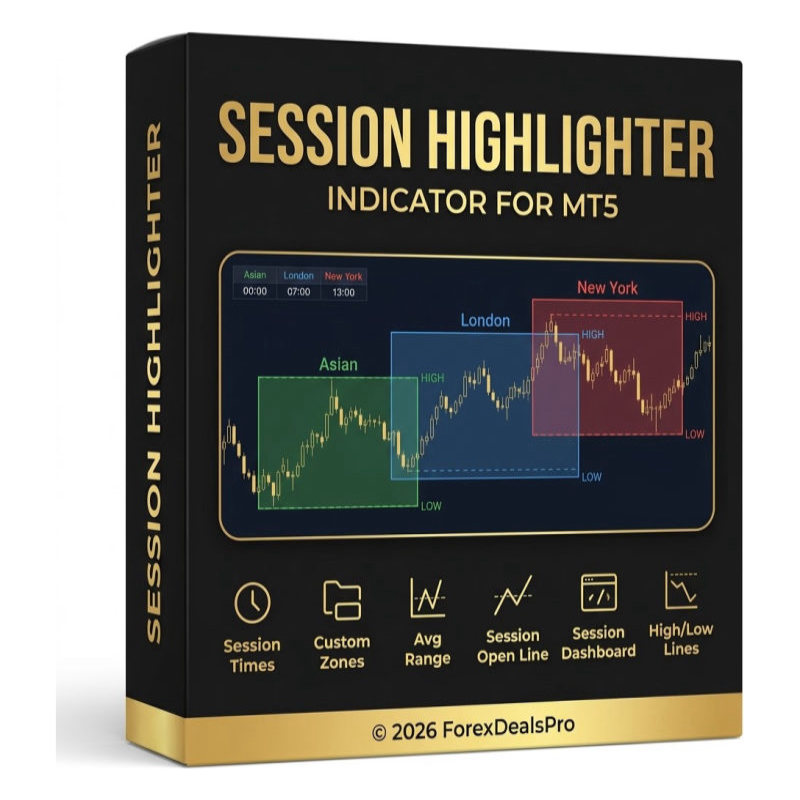
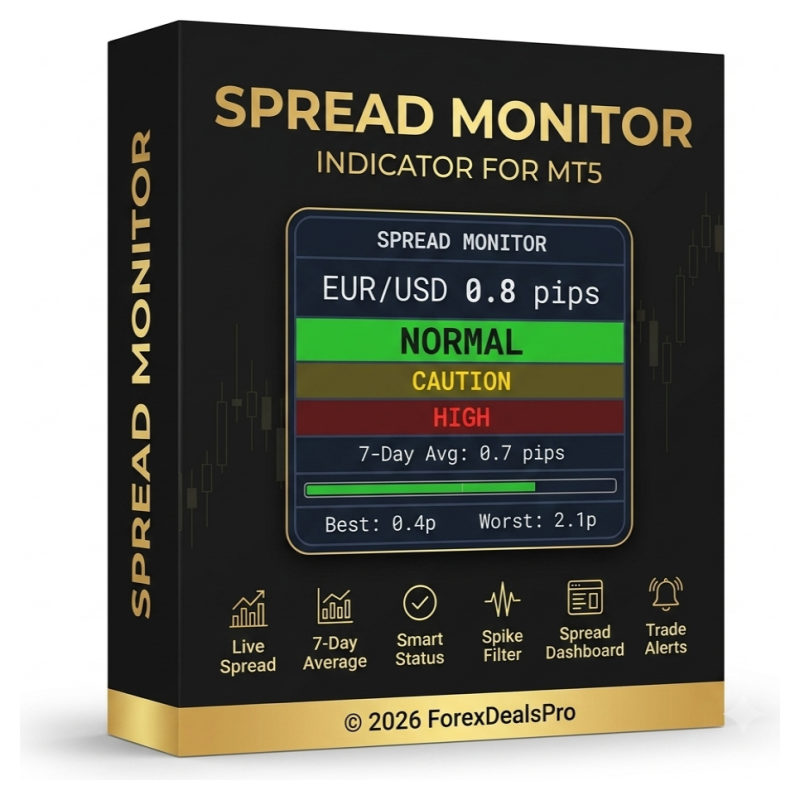
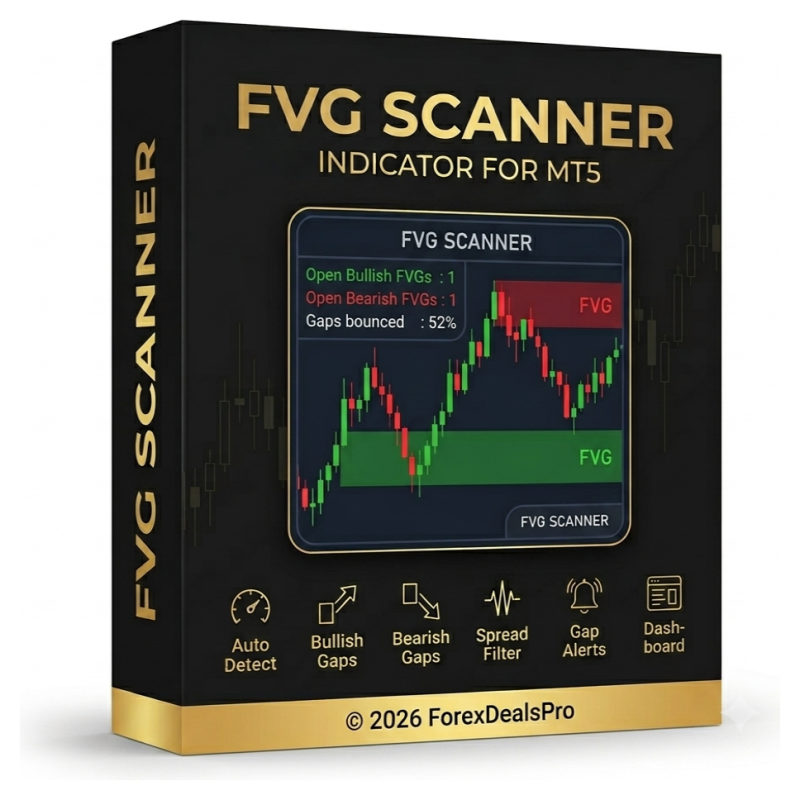
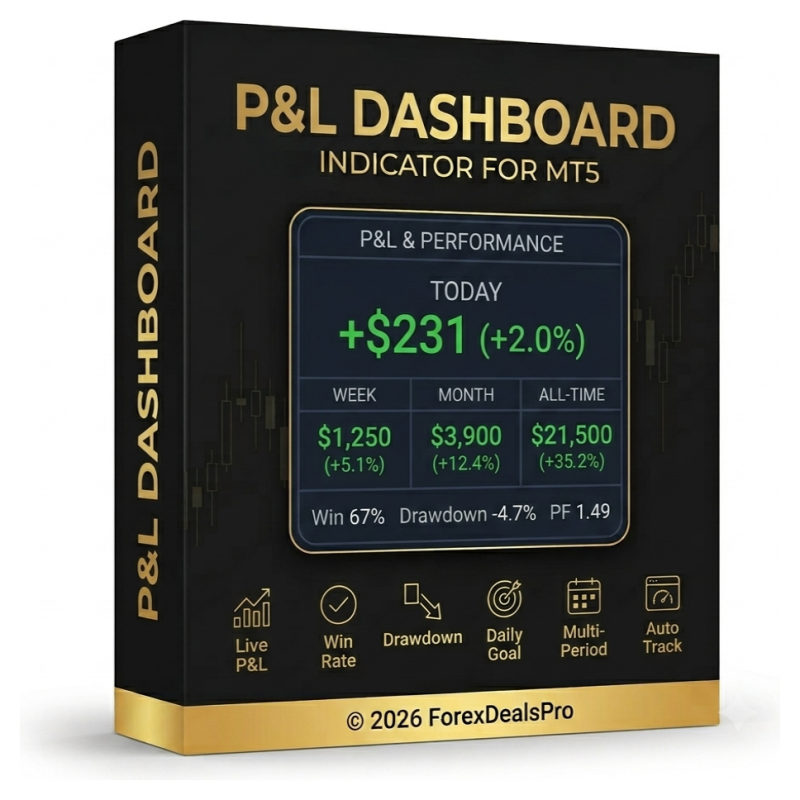
MT4/MT5 Indicators & Expert Advisors
A growing library of professional MT5 indicators and Expert Advisors, built in-house to give you a genuine trading edge — and many are free to download.
Cashback - The Smart Way to Reduce Your Trading Costs
You earn on every trade.
Regardless of the outcome.
Cashback is a rebate paid on the spread or commission of every trade you execute - whether the trade wins or loses. It's the only trading benefit that never depends on market direction. The more you trade, the more you earn back, automatically.
How to start earning





How Forex Leverage Has Changed in 2026: 1:30, 1:1000, or 1:5000?

Why Leverage Numbers Look So Different Now
The short answer: all three can be real for retail traders, depending on the broker, regulatory entity, client classification, instrument, and account conditions. There's no single global leverage limit for retail forex and CFD trading in 2026.
If you've been trading forex or CFDs for a while, you've probably noticed the leverage landscape looks different today than it used to. A broker advertising 1:1000 or even 1:5000 is no longer unusual in some markets, while other brokers and regulated entities apply far tighter limits than were common in the past. The old assumption that forex simply comes with one standard high-leverage ratio no longer reflects the market.
What has changed is not how leverage works, but how much leverage brokers make available and under which conditions. The leverage available to you depends on which legal entity of a broker you're opening an account with, where that entity is regulated, what type of client you are, and sometimes your account size or position size. Rise advertises leverage of up to 1:5000, while XM and PUPRIME both advertise leverage of up to 1:1000 under certain entities and conditions, and the same broker can show 1:30 to one trader and 1:1000 to another. If you're newer to forex, our What Is Forex Trading guide covers the basics worth knowing before going further.
The headline leverage number is useful, but it isn't the whole story. In 2026, understanding the regulatory entity behind the account, and whether the advertised maximum actually applies to your account, matters more than simply finding the largest ratio.
How Forex Leverage Has Changed in Recent Years
The leverage landscape hasn't simply moved in one direction. It's diverged into two directions at once.
On one side, the European Securities and Markets Authority's 2018 product-intervention measures capped leverage for retail clients trading CFDs under EU-regulated entities at 30:1 for major currency pairs, with lower caps for other instrument categories[1]. The UK's Financial Conduct Authority made equivalent restrictions permanent for UK-regulated entities the following year, effective 1 August 2019[2]. Before those restrictions took effect, retail clients under those regulatory frameworks could generally access higher leverage than the limits imposed today. For retail clients served by an EU- or UK-regulated entity today, that regulatory shift is the main reason leverage looks far more conservative than it once did.
On the other side, brokers operating under other regulatory frameworks, often serving clients outside the EU and UK, may advertise substantially higher maximums, with competition for clients being one factor behind the availability of high-leverage offers. Ratios that were once unusual, such as 1:500, 1:1000, and even 1:5000, have become more widely advertised across that segment of the market. That's a genuine shift in what's commercially available, not a change in what leverage itself does to your underlying risk.
The practical result is that the range of leverage available across the global retail CFD market has become much wider, with the actual limit increasingly determined by the product, jurisdiction, legal entity, and client classification rather than by a single industry-wide number.
What Is Forex Leverage?
Leverage allows you to control a larger market position with a smaller amount of your own capital, with the required amount held as margin by the broker.
For example, at 1:100 leverage, $1,000 of margin would theoretically be sufficient to establish a $100,000 position, assuming the full leverage ratio applies and ignoring broker-specific margin requirements and trading costs. At 1:1000 leverage, the same $1,000 could theoretically provide exposure to a $1,000,000 position, subject to the broker's terms, margin requirements, instrument and account restrictions.
The important point is that leverage doesn't make the underlying market move more slowly or quickly, and it doesn't improve the probability of a trade succeeding. It changes how much margin is required to establish a particular position.
A $50,000 position remains a $50,000 position whether the account has 1:30, 1:100, 1:500, or 1:1000 maximum leverage. What changes is how much capital must be committed as margin to control that position.
Leverage is a mechanical tool, not a measure of whether a trade is good or bad: it allows you to control a larger position with less margin. The sections below cover what that actually means for your risk.
Forex Leverage and Margin at a Glance
Illustrative calculation assuming the stated leverage is fully available for the position and ignoring spread, commissions, currency conversion, and other broker-specific requirements.
| Leverage Ratio | Margin Required for a $50,000 Position | What It Means |
|---|---|---|
| 1:30 | About $1,667 | Higher margin requirement |
| 1:100 | $500 | Lower margin requirement |
| 1:500 | $100 | Much lower margin requirement |
| 1:1000 | $50 | Very low margin requirement |
| 1:5000 | $10 | Extremely high leverage availability |
Why the Same Broker Can Offer 1:30 or 1:1000
Although this article focuses on forex, many of the regulatory leverage limits discussed below apply within the broader retail CFD framework, where forex is one of the covered product categories.
The European Securities and Markets Authority (ESMA) introduced product-intervention measures for retail CFD clients in 2018. Among other restrictions, the measures limited leverage for retail clients trading CFDs to 30:1 for major currency pairs, with lower limits applying to other CFD categories: 20:1 for non-major currency pairs, gold, and major indices; 10:1 for commodities other than gold and non-major equity indices; 5:1 for individual equities; and 2:1 for cryptocurrencies[1].
For retail clients served by an EU-regulated entity, that framework is why major-currency-pair CFD leverage is generally capped at 1:30. A broker that also operates another legal entity outside the EU may be subject to a different regulatory framework, and if that entity permits higher leverage, the same broker can therefore advertise figures such as 1:500, 1:1000, or higher to eligible clients served by that entity.
The same principle applies when comparing other regulated entities. A broker can have multiple companies within its corporate structure, each with its own regulator, leverage limits, investor protections, and promotional rules. This is the same regulatory-entity distinction covered in our No Deposit Bonus vs Deposit Bonus article.
That's why asking only "Is this broker regulated?" isn't enough. The more useful questions are which legal entity will hold your account, which regulator supervises that entity, what leverage applies to retail clients under that entity, whether the advertised maximum applies to your country, and whether the maximum changes based on position size or account equity.
So what do the numbers mean in practice? In 2026, 1:500 is not a universal ceiling: depending on the entity and applicable conditions, some brokers advertise up to 1:1000, while a smaller number go as high as 1:5000. But the headline figure tells you only what may be available under a particular entity and set of conditions, not necessarily what applies to your account.
Dynamic and Tiered Leverage
A separate development that matters when comparing high-leverage brokers is tiered or dynamic leverage. Under this structure, the maximum leverage isn't necessarily a single fixed ratio across your entire account. Instead, the broker can automatically reduce the available leverage as your position size, exposure, or account equity passes certain thresholds.
For example, a broker might make very high leverage available on smaller positions while applying progressively lower leverage once exposure becomes larger. The exact thresholds and step-down schedules are broker-specific and can change, so a banner advertising 1:1000 doesn't necessarily mean you can use 1:1000 on every position or at every account balance.
This is particularly important when comparing brokers advertising very high leverage. Before opening an account, check the broker's current leverage schedule and determine the maximum leverage for the currency pairs you intend to trade, whether leverage changes with position size, whether account equity affects available leverage, whether leverage is different for different instruments, and whether leverage changes automatically when exposure increases. A high headline figure can still be useful, but only if you understand the conditions attached to it.
What Higher Leverage Actually Means for Your Risk
Higher leverage does not mean higher expected returns. It means you can establish a larger position with less margin. If you choose to use that additional capacity to increase your position size, your potential dollar gain and potential dollar loss both increase.
For example, suppose you have $1,000 in your account. With 1:100 leverage, you could potentially obtain exposure of up to $100,000, subject to the broker's margin rules. With 1:1000 leverage, the theoretical maximum exposure could be much larger. But that doesn't mean you should trade a larger position. If you choose a $10,000 position and your risk-management rule limits the potential loss to a particular amount, the appropriate position size can remain the same regardless of whether your account has 1:30 or 1:1000 maximum leverage.
Leverage availability and risk-per-trade are two different decisions. This is why higher leverage shouldn't automatically be treated as an advantage. For disciplined traders, higher leverage can simply mean they need less margin to establish the position size they've already decided is appropriate.
What About Negative Balance Protection?
ESMA's product-intervention measures also included negative balance protection for retail CFD clients, meaning eligible clients under the relevant framework cannot lose more than the funds in their CFD trading account as a result of CFD trading[1].
However, you shouldn't assume that an account opened under a different regulatory entity automatically provides the same protection. If you're considering a broker offering 1:1000 or 1:5000 leverage, check the specific entity's terms and conditions and determine what protections apply to your account before depositing.
Using Leverage Without Letting It Use You
- Treat leverage as access, not a target. The leverage available to you is a maximum capability, not a recommendation. Your position size should come from your trading strategy and risk limit, not from the largest number shown in the account settings.
- Size positions from your risk tolerance, not available margin. Our Forex Risk Management guide covers position sizing around a defined percentage of account risk per trade, which stays relevant whether your account offers 1:30 or 1:5000 leverage.
- Confirm negative balance protection. Check whether the specific legal entity serving your account provides negative balance protection and understand exactly how it applies. Don't assume it automatically follows the broker's brand across every jurisdiction.
- Check the actual tiered leverage schedule. If a broker advertises 1:1000 or 1:5000, check whether that maximum applies to the position size you intend to trade. The broker's actual leverage schedule matters more than the number in its marketing material.
- Keep your risk rule independent of leverage. If your risk rule says you're prepared to risk 1% of your account on a trade, don't increase that risk simply because higher leverage makes a larger position possible.
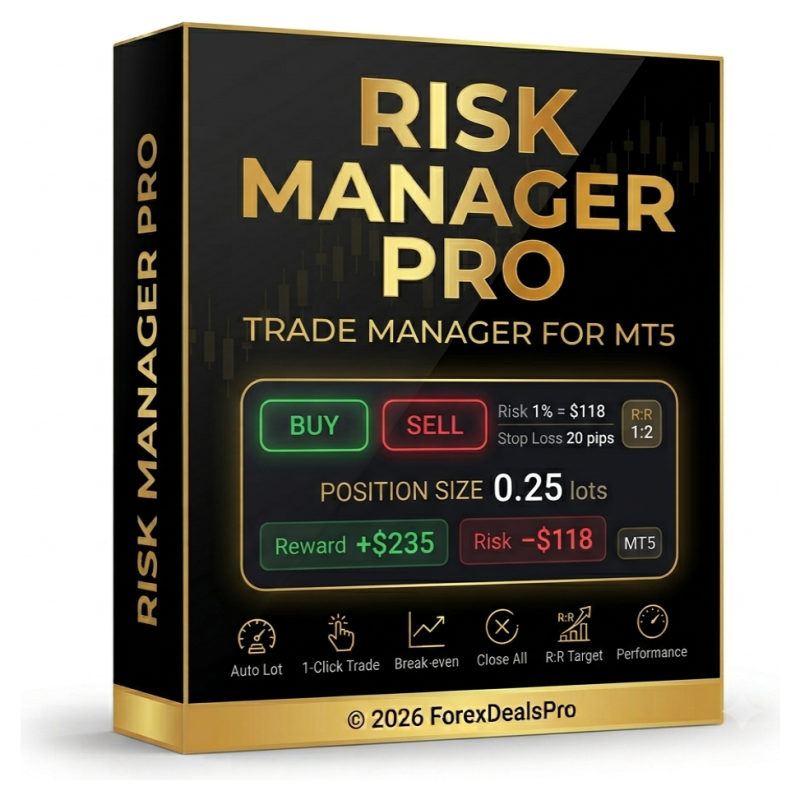
- Use a tool that enforces your risk limit. ForexDealsPro's free Risk Manager Pro can help calculate position size and keep your planned risk separate from the amount of leverage or margin available in your account.
How to Compare High-Leverage Forex Brokers
- The legal entity. Determine which company will actually hold your account and which regulator supervises it.
- The leverage available to your account. Check whether the advertised maximum applies in your country, account type, and intended instruments.
- Tiered leverage rules. Find out whether leverage falls as position size or account equity increases.
- Margin requirements. Look at how much margin is actually required for the instruments you intend to trade.
- Negative balance protection. Confirm whether the specific entity provides it and under what conditions.
- Trading costs. Spreads, commissions, swaps, and execution quality can affect your results far more than whether the maximum leverage is 1:500 or 1:1000.
- Withdrawals and broker reliability. High leverage is irrelevant if the broker's broader conditions don't suit your needs. Our How to Choose a Forex Broker guide covers the wider checks worth making, and our Forex Broker Scam Warning guide explains how to check a broker's legal entity and regulatory status before depositing.
Rise, XM and PUPRIME: Why the Headline Numbers Differ
The differences between Rise, XM, and PUPRIME illustrate the point clearly. Rise advertises leverage of up to 1:5000, while XM and PUPRIME advertise leverage of up to 1:1000 under certain entities and conditions.
That doesn't mean Rise is automatically the better broker, or that a trader using XM or PUPRIME is necessarily disadvantaged. The useful comparison is what those leverage figures mean for the specific account you're eligible to open. A trader who only needs 1:100 leverage may gain little practical benefit from having access to 1:5000. Conversely, a trader who wants to maintain a particular position size with less margin may value higher leverage, provided the broker, regulatory entity, costs, and protections otherwise meet their requirements.
Our XM vs IC Markets vs AvaTrade vs PUPRIME comparison is a useful next step if you're comparing these brokers on factors beyond leverage alone.
The Bottom Line
Forex leverage hasn't simply moved higher or lower in the years leading up to 2026. The market has split in different directions: regulation has tightened leverage for many retail clients in the EU and UK, while some other jurisdictions and brokers now advertise dramatically higher maximums. The more accurate picture is that different regulatory entities can offer very different leverage limits, while brokers increasingly use tiered or dynamic structures that can make the advertised maximum less straightforward than it first appears.
1:500 is therefore not a universal ceiling. Depending on the broker, jurisdiction, legal entity, account type, and applicable conditions, traders may encounter leverage of 1:1000 or even 1:5000. But the largest number isn't automatically the best choice. Higher leverage reduces the margin required to establish a given position; it doesn't make the underlying trade safer or more profitable. Your position size, stop-loss, risk-per-trade rule, and available capital should determine how much you trade, not the maximum leverage displayed by the broker.
Before choosing a high-leverage broker, verify which entity will hold your account, what leverage actually applies to you, whether leverage changes with position size, what protections are available, and what the broker charges to trade.
Frequently Asked Questions
For retail clients trading CFDs under the EU framework, ESMA's product-intervention measures introduced a 30:1 leverage limit for major currency pairs, with lower limits applying to other CFD categories. The restrictions were introduced as investor-protection measures.
Not by itself. Leverage determines how much margin is required to establish a position. The main risk comes from the size of the position you actually take relative to your capital. Higher leverage can, however, make it possible to take much larger positions with the same amount of margin, which can increase risk if you use that capacity.
Tiered or dynamic leverage means the maximum leverage can change according to factors such as position size, exposure, or account equity. A broker may offer very high leverage on smaller positions and reduce the available ratio as exposure increases.
Not necessarily. Whether you can lose more than the funds in your account depends on the protections and terms that apply to your specific legal entity and account. EU-regulated retail CFD clients benefit from negative balance protection under the applicable framework, but you shouldn't assume identical protection applies to every offshore or non-EU entity.
Generally, beginners shouldn't treat maximum available leverage as a target. It's more important to learn position sizing and risk management, and to determine how much you're prepared to lose on each trade, before deciding how much exposure to take.
No. The advertised ratio is a maximum leverage figure, not necessarily a guarantee of 1:1000 exposure on every position. Instrument restrictions, account type, jurisdiction, position size, account equity, and tiered leverage rules can all affect the leverage actually available.
References
References
- European Securities and Markets Authority (ESMA): ESMA agrees to prohibit binary options and restrict CFDs to protect retail investors, 27 March 2018: esma.europa.eu — ESMA agrees to prohibit binary options and restrict CFDs
- Financial Conduct Authority (FCA): PS19/18 — Restricting contract for difference products sold to retail clients, effective 1 August 2019: fca.org.uk — PS19/18
About Us
Your trusted gateway to elite forex deals, broker reviews, and smarter trading.
What We Do
We research, verify, and curate the best broker deals, cashback programmes, and trading promotions available in the market, updated regularly so you always have access to what is current and relevant. Alongside our deals, we publish independent broker reviews built on objective criteria: regulatory standing, trading conditions, platform quality, and client protections.
Who We Are
ForexDealsPro is run by a dedicated team of trading and finance professionals with over a decade of combined market experience. That hands-on knowledge informs everything we publish, from the brokers we feature to the way we explain complex trading concepts in plain language.
We operate as an affiliate information platform. We earn a commission when you open an account through our links, at no additional cost to you. This model allows us to keep the platform free, independent, and focused entirely on trader value.
Our Standards
- We only feature brokers regulated by recognised financial authorities
- Every deal and promotion is verified before publication
- Broker ratings are independent and never influenced by commercial relationships
- Affiliate partnerships are always disclosed transparently
Our Editorial Process
All articles published on ForexDealsPro are thoroughly researched using primary regulatory sources, industry reports, and reputable financial publications, then verified for accuracy before publication. Our editorial team holds combined experience in forex trading, financial analysis, and compliance.